
Odisha Rasgulla vs. Bengali Rasgulla: What’s the Real Difference?
Odisha Rasgulla vs. Bengali Rasgulla: What’s the Real Difference?
You’ve seen it on menus. Debated it at dinner. Maybe even Googled it mid-bite: “Which rasgulla is the original?”
The sweet rivalry between Odisha Rasgulla and Bengali Rasgulla is one of India’s most delicious cultural debates — steeped in history, devotion, and, yes, a little pride.
But beyond taste, there are real, measurable differences — in origin, texture, preparation, and even legal recognition.
Let’s settle the syrup once and for all — with facts, not folklore.
The Origin Story: Temple Prasad vs. Sweet Innovation
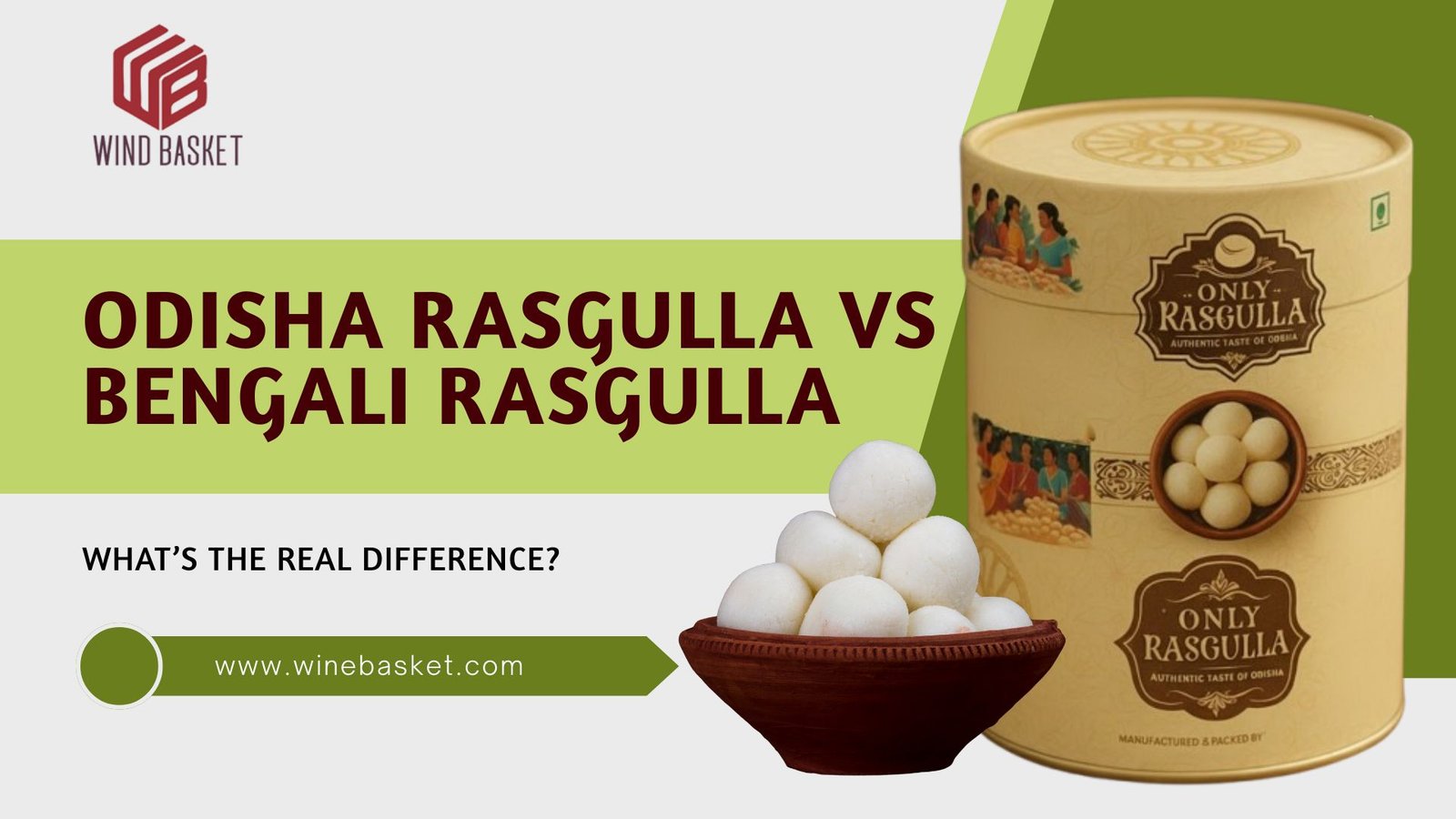
Odisha Rasgulla: Born in Devotion (12th Century)
Historical records, temple chronicles (Madala Panji), and oral traditions point to rasgulla as part of Mahaprasad at Puri’s Jagannath Temple since at least the 16th century — and likely earlier.
- Offered to Lord Jagannath after Bada Singhara (night ritual)
- Made by Suara and Mahasuar sevayats using fresh chhena and light sugar syrup
- Known locally as “Khira Mohana” or “Pahala Rasgulla”
📜 In 2017, the GI Registry officially recognized “Odisha Rasgulla” — granting it Geographical Indication status (Application No. 611), citing centuries of cultural and religious significance.
Bengali Rasgulla: A 19th-Century Sweet Revolution
While chhena-based sweets existed in Bengal earlier, the modern, spongy, syrup-soaked rasgulla we know today was popularized by Nobin Chandra Das in Kolkata (1868).
- Adapted for mass production and shelf stability
- Used finer chhena pressing and controlled heat for uniform texture
- Became a household staple and export icon
💡 Fun Fact: Before GI registration, many assumed rasgulla was “Bengali by default.” Now, both states have separate GI tags:
- Odisha Rasgulla (2017)
- Banglar Rosogolla (2018)
Feature | Odisha Rasgulla | Bengali Rasgulla |
|---|---|---|
Color | Off-white / light cream | Bright white (often with a glossy sheen) |
Texture | Softer, more porous, melts faster | Firmer, denser, holds shape longer |
Syrup | Light, mildly sweet (1:1 sugar:water ratio) | Heavier, sweeter syrup (1.5:1 or more) |
Size | Slightly smaller, uniform | Often larger, sometimes teardrop-shaped |
Chhena Prep | Curdled with starter culture (yogurt) | Often curdled with lemon/citric acid |
Cultural Role | Sacred Mahaprasad | Celebratory dessert / everyday treat |
Why the GI Tag Matters — Beyond Pride
The GI (Geographical Indication) tag isn’t just about bragging rights. It protects:
- Artisan livelihoods in Puri (over 200 moira families depend on rasgulla-making)
- Traditional methods (hand-kneading, copper degchi cooking)
- Consumer authenticity — ensuring you get the real thing, not factory imitations
Love Rasgulla? Try the Original.
Don’t just read about it — taste the difference.
Our Premium Puri Rasgulla Hampers are:
✅ GI-tag certified
✅ Handcrafted daily in Puri
✅ Vacuum-sealed & chilled for freshness
✅ Delivered pan-India in 24–48 hours
📦 Perfect for Diwali, Rakhi, weddings, or “just because” gifting.
Final Thought
Whether you prefer Odia or Bengali — both are delicious legacies of India’s sweet genius. But if you seek the original, the devotional, the GI-protected — the answer is clear:
It began in Puri. It lives in every bite.
📣 Share this post to settle the debate once and for all!